
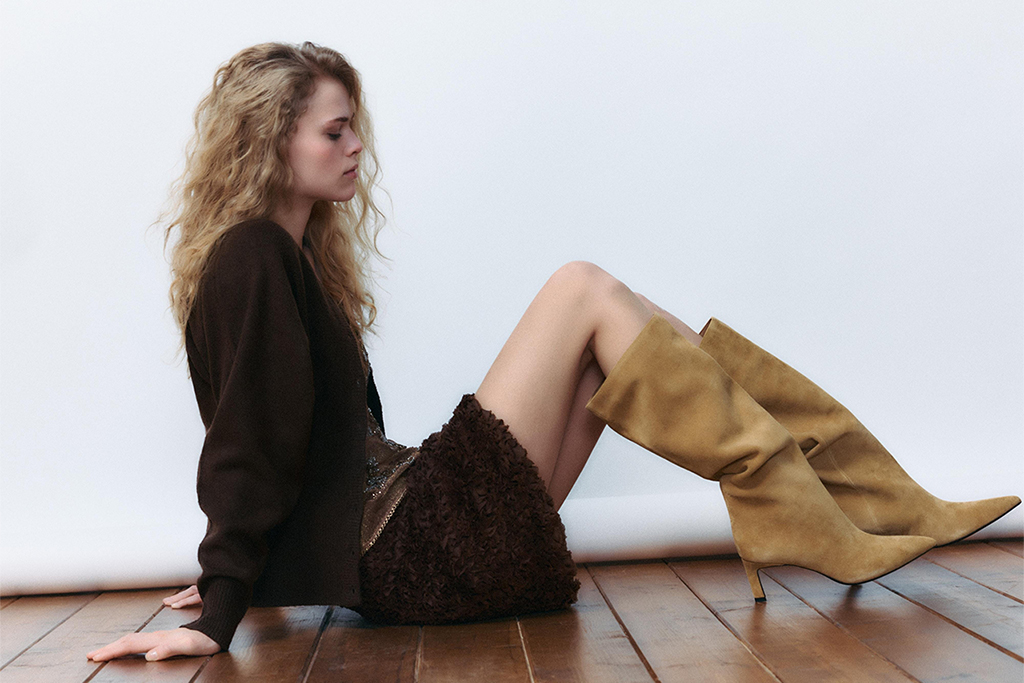
Welcome to a tour of the past we tried so hard to forget. Hold on tight, because your 2005 wardrobe has decided it still has unfinished business here and is coming back to deliver the final blow to your sense of style.
The graveyard of trends we dug up again
Leggings. The very ones we wore as trousers because we were convinced it looked stylish. In 2025, they made a triumphant return to the Prada and Balenciaga runways, becoming “one of the biggest trends of the season”. Vogue predicts they will become a “second skin” that replaces our favourite jeans. But now they are no longer simply leggings: they are “legging trousers”, “legging boots” or even “pirate trousers”. And, of course, they have to be purple — the colour expected to dominate autumn 2025. Just imagine: you are no longer merely putting on tights; you are making a statement.
Capri trousers. The most controversial trend of the 2000s, which seemed to have died a natural death, has also risen from the grave. ELLE reports that they are fashionable again and should now be worn with a voluminous top to avoid “excessive flatness”. In other words, we have finally admitted that we used to look like upside-down cones and are now trying to correct the mistake.
Ballet tights with trainers. Or, as they are now called, “ballet trainers” — “the most controversial trend” that “everyone will be wearing”. They are the love child of delicate ballet flats and comfortable trainers, which Harper’s Bazaar describes as “a bizarre and extremely contrasting mix of elegance and comfort”. Vogue uses an even more accurate term: “mutant ballet flats”. It seems this is game over for our sense of beauty.
Low-rise jeans. The symbol of 2000s rebellion that we swore never to wear again is back. Vogue warns that straight trousers sitting on the hips are “returning to the list of major trends”. Prepare to experience once again that incomparable discomfort and the fear that one careless movement will turn you into the star of an embarrassing video.
Glitter, rhinestones and everything “excessive”. The Y2K aesthetic is not merely a collection of individual items; it is an entire mood. Bright colours, shiny fabrics, futuristic cuts and platform shoes evoke nostalgia for a time when we still believed in a better future. Appropriateness? Forget it. The main thing is to make sure you can be seen from space.
Why are we buying this “horror” again? The psychology of fashion cycles
So why are we, fully grown adults, once again voluntarily dressing like characters from Destiny’s Child music videos? There are several reasons, and all of them are buried deep in our minds.
Nostalgia as an emotional anchor. During periods of uncertainty and change, we seek comfort in the familiar. Despite all its fashion crimes, many people associate the 2000s with a carefree and optimistic time. By dressing in the Y2K style, we seem to be trying to recover that sense of lightness, especially after all the upheavals of recent years.
Rebellion against “boring” minimalism. We are tired of beige, grey and “quiet luxury”. Y2K is a scream: “Bright! Loud! Blending in is not for me!”. It is a way of declaring your individuality and “main character energy” in an era when everyone is trying to look the same.
Generation Z’s “vicarious nostalgia”. For those who were too young to remember the 2000s, this aesthetic is not an embarrassing part of the past but an exciting game of dress-up. They “borrow memories” and make them their own, reinterpreting trends through the lens of TikTok and contemporary fashion.
Profitable economics for brands. Reissuing old collections is a gold mine. Brands do not need to reinvent the wheel; they only have to pull it out of the archive, update it slightly and sell it to us as a new trend. And we buy it, driven by nostalgia and the desire to stay fashionable.
So the next time your hand reaches for a pair of purple leggings or you find yourself examining “mutant ballet flats”, remember: this is not merely clothing. It is a complex mixture of nostalgia, psychological self-protection and skilful marketing. And it seems we are doomed to repeat this cycle forever. But we already went through this in the 2000s, didn’t we? The worse it looks, the better — apparently.